Showing posts with label cravings. Show all posts

Friday, April 25, 2014

Whole 30 week 1

Well, actually it's the end of the not really week 1 and the beginning of the REAL week one.

I "started" Whole 30 on April 17, then again on April 21 and then OFFICIALLY on April 24.  What's up with that???  Whole 30 requires you to do the program for 30 SOLID days.  There is no cheating.  If you cheat, you have to start over.  So, I cheated on Saturday night when I was dishing up my kids Easter candy.  I threw in the towel after that until Monday.  Then I ended up finding more Easter candy on Monday, Tuesday, and went to lunch and ate some of my husbands onion rings on Wednesday.

This is the deal: I wasn't PREPARED!  I had started the book, "It Starts with Food," but I hadn't read more than a few chapters.  Then I realized that I wasn't supposed to have peanuts, so I had a bit of a freak out about that and went crazy on the peanut butter jar.  I also had some bad experiences with my pre-run meals.  Egg before running=stomach pain and bloating!!!

I wasn't READY!  I was still stuck in the mindset of what I was GIVING UP, instead of focusing on what I can HAVE!  My reason for doing Whole 30: figure out a healthy relationship with food, specifically sweets.  My goal is to get to the point where I can really enjoy an occasional "treat" without feeling guilty and then sabotaging everything that I have accomplished by going on a 5 day sugar spree.

There are some "rules" with Whole30 that I don't entirely agree with.  I have been eating 5-6 small meals for several years now.  However, Whole30 requires 3 meals, with maybe one light snack.  I am not willing to budge on my meal frequency at this point.  I know that if I went longer than 3 hours between meals, I would end up in the pantry with peanut butter in one hand and Kit Kats in the other (you'll just have to believe me-that combination is delicious).   I also am going to continue to drink Shakeology daily.  I have benefited too much from it to quit it.  I guess I can be criticized for this, but I'm 36 years old so I guess that I can make these decisions.

What foods are eliminated with the Whole30?
Sugars
Sweeteners
Alcohol
Seed oils
Grains and legumes
Dairy

Foods that are encouraged:
Meat
Seafood
Eggs
Vegetables
Fruit
The Right fats

For more info: The Whole 30 Program Rules

I have also found a great community on Instagram (#whole30) and I have started a Whole 30 board on Pinterest.  I would love to have as many people join in on this adventure with me.  Like I have said many times, MISERY LOVES COMPANY!


Wednesday, April 9, 2014

Sweeteners

Just for clarification (if you know me or have been reading my blog, this won't be anything new):  I adore sweets.  Especially chocolate.  I LOVE it!!!  I have done sugar elimination challenges before and all it does is make me want it even MORE.  What I have decided for my own sanity and for the well being and happiness of those around me, is that I will not give up sweets entirely, but rather I will eat them in moderation.  I just do better if I plan for a few treats a week.  That way I don't feel like I am totally depriving myself.  

I know a lot of people that have totally eliminating sugar from their diets.  I am in awe of them and impressed with their will power.  Part of me wishes that I could be more like them, and the other part of me wants to go make brownies.  


In my quest to improve my health and clean up my diet, I decided that I wanted more information on sugar.  I thought that it would be pretty simple.  I could just google sugar and poof, I would find a simple explanation.  That's not exactly what happened.  I found so much information and opinions, that my head started to spin.  


I decided that I would start off this quest by first looking into the different types of natural sweeteners available.  I'm not going to delve into artificial sweeteners at this time.  I try to avoid them and I believe that they are considered non-foods. 


It's important to remember that sugar is sugar, whether it is honey or the stuff you make sugar cookies with.  What is important to realize is that some sweeteners are more nutritious than others, have a lower glycemic index, and fewer calories.  


Sugarcane is a tropical grass that humans have used for thousands of years.  
REFINED SUGARS
  
Sugarcane
These include light and dark brown, powdered, and granulated white sugars.  These sugars are refined which means that the processing that they go through to go from the tropical grass to the actual sugar, strips away vitamins and minerals that naturally occur in the sugarcane plant.  The sugarcane stalks are basically pulverized, and water and lime are added to produce a juice. The juice is boiled until the sugar crystallizes. The crystals are run through a centrifuge, which separates the syrup. In the final stages, the sugar goes through the refining process, which involves washing, filtration and other purification methods to produce pure, white sugar crystals.
Sugar from Sugar Beets
Table sugar is extracted from the roots of sugar beets and the stalks of sugarcane. A beet is 17 percent sugar, so the task is to draw out this sugar from the sugar beet. The beets are sliced and placed in hot water, which produces a sugary juice. This juice then goes through several filtration, purification and concentration stages to isolate the sugars. The juice is also boiled so that it thickens and more crystals develop. The syrupy juice is then sent through a centrifuge to separate the crystals. The white crystals must then be granulated and packaged.  I grew up near a sugar beet factory and it was so stinky.  I was always amazed that sugar processing smelt so bad. 
High-fructose corn syrup (HFCS) comes from corn. Created in the 1960s, it is now a sweetener used in numerous processed foods including many sodas. The syrup has become popular for food makers because it's cheaper than white sugar. 


HFCS is classified as unnatural and artificial because the production process requires the addition of enzymes and altering the molecular arrangement of regular corn syrup, which makes it a GMO.  HFCS is high in fructose which is of concern since some research has linked high fructose intake to weight gain (especially around the abdominal area), high triglycerides, heart disease and insulin resistance.  Avoid HFCS because it has no nutritional value and it is easily and quickly processed by the body, which means that it goes straight to your muffin top.  


UNREFINED SUGARS
Blackstrap molasses is derived from sugarcane.  However, because it is less processed than refined sugar from sugarcane, it still contains significant amounts of vitamins and minerals. Sugarcane juice is boiled, cooled, and removed of its crystals, then it is boiled again (called second molasses) and then once more to produce Blackstrap molasses.  Through this third boiling process the most nutritious molasses is made, containing substantial amounts of calcium, magnesium, potassium, and iron. When buying, consider choosing organic blackstrap molasses, as pesticides are more likely to be concentrated due to the production of molasses. 
Cooking notes: Blackstrap molasses has a very strong flavor, so it is best to just replace a small portion of sugar with molasses. 

Rapadurda is the Portuguese name for unrefined dried sugarcane juice. Probably the least refined of all sugarcane products, Rapadura is made simply by cooking juice that has been pressed from sugarcane until it is very concentrated, and then drying and granulating.  The only thing that is removed from the original sugarcane juice is the water.   Rapadura contains all of the vitamins and minerals that are normally found in sugarcane juice.  It has a similar taste and dark color to molasses.  
Sugar substitutionRapadura replaces sugar 1:1.  Good for sugar substitutions in baked goods like brownies, coffee and black tea.

Sucanat stands for sugar-cane-natural, and is very similar to Rapadura. It is made by mechanically extracting sugarcane juice, which is then heated and cooled until tiny brown crystals form. It contains about 11% less sucrose than table sugar.  
Sugar substitution: Sucanat replaces sugar 1:1 and is also an accepted substitute for traditional brown sugar. Use it as you would rapadura (see above).
Turbinado sugar is often confused with sucanat, but the two are different. After the sugarcane is pressed to extract the juice, the juice is then boiled, cooled, and allowed to crystallize into granules (like sucanat, above). Next, these granules are refined to a light tan color by washing them in a centrifuge to remove impurities and surface molasses. Turbinado is lighter in color and contains less molasses than both rapadura and sucanat. A popular brand-name of turbinado sugar is Sugar in the Raw, which can be found in most natural food stores, and even in single-serve packets at coffee shops.  I buy it in the bulk foods section at Winco.
Sugar substitution: Replaces sugar 1:1. Turbinado is a great substitute for brown sugar, however, make sure that the granules "dissolve" before baking or you will end up with a bit of a crunch in your baked goods.  

Evaporated cane juice is essentially a finer, lighter-colored version of turbinado sugar. Still less refined than table sugar, it also contains some trace nutrients (that regular sugar does not), including vitamin B2. 
Cooking notes: Replaces sugar 1:1. Can be used in a wide variety of foods and recipes without adversely affecting color or flavor.

Agave nectar is produced from the juice of the core of the agave, a succulent plant native to Mexico. Far from a whole food, agave juice is extracted, filtered, heated and hydrolyzed into agave syrup. Vegans often use agave as a honey substitute, although it’s even sweeter and a little thinner than honey. It contains trace amounts of iron, calcium, potassium and magnesium.  Agave became popular because it has a low gylcemic index because of its low glucose content.  However, the fructose content of agave syrup is much higher than that of high fructose corn syrup.   High fructose corn syrup contains 55% fructose while agave nectar syrup contains 90%. Also there is a lot of controversy about how Agave is being produced.  Because of this, I don't use Agave very often.  I have a few paleo recipes that call for it, but I have started to replace it with honey instead. 

Cooking notes: To replace 1 cup of sugar, use 2/3 cup of agave nectar, reduce the quantity of liquids slightly, and reduce the oven temperature by 25 degrees Fahrenheit. It also makes a good sweetener in cold liquids, such as iced tea.

Brown rice syrup is made when white cooked rice is cultured with enzymes.  These enzymes break down the starch in the rice resulting in a liquid that is then cooked down to a thick, brown syrup. Cooking notes:  Brown rice syrup is about half as sweet as white sugar and has a mild butterscotch flavor. To replace one cup of sugar, use 1-1/3 cups brown rice syrup, and reduce liquid by about 1/4 cup and add 1/4 teaspoon baking soda. Brown rice syrup has the tendency to make food harder and crispier, so it’s great in crisps, granolas, and cookies. 


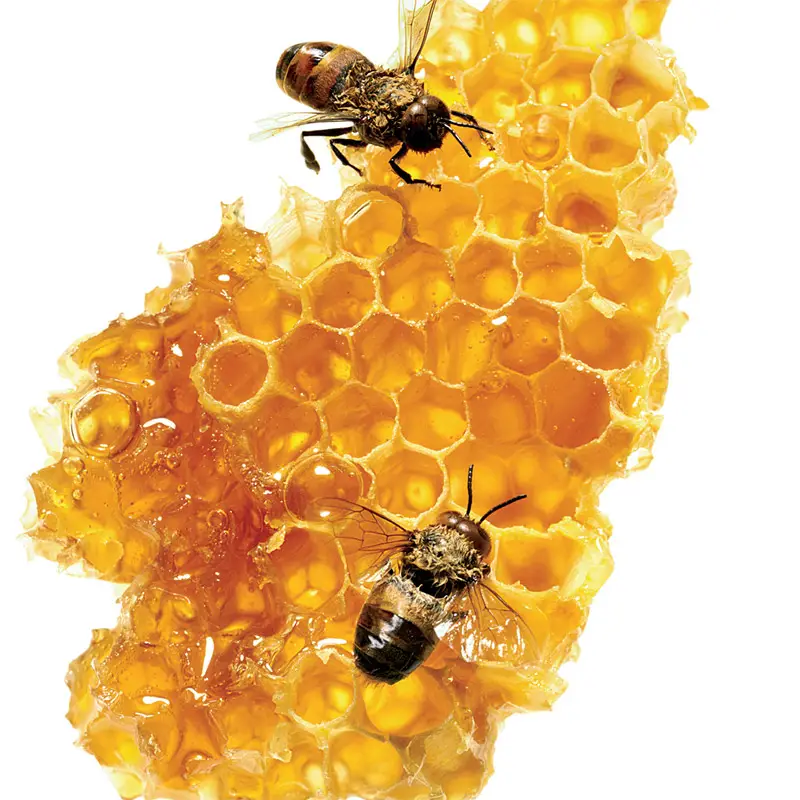
Honey, made by bees from the nectar of flowers, is a ready-made sweetener that contains traces of nutrients.  I usually use honey to replace sugar in the majority of my recipes.  I especially like the depth that it adds to breads.  I feel bad only discussing it for such a short paragraph since I do love it so much, but what more is there to say.  It's made by bees!!!
Cooking notes: To replace 1 cup sugar in baked goods, use about 3/4 cup of honey and lower the oven temperature 25 degrees Fahrenheit and reduce liquids by about 2 Tablespoons for each cup of honey.

Maple syrup comes from the sap of maple trees, which is collected, filtered, and boiled down to an extremely sweet syrup with a distinctive flavor. It contains fewer calories and a higher concentration of minerals (like manganese and zinc) than honey. Read the ingredients list on the nutrition label carefully, true maple syrup contains nothing but “maple syrup.”
Cooking notes: To replace 1 cup sugar in baking, use about 3/4 cup of maple syrup and lower the oven temperature 25 degrees Fahrenheit. For each cup of maple syrup, reduce liquids by about 2 tablespoons. 


SweetenerServing sizeCaloriesCarbsOther nutrients of note
White (table) sugar2 tsp338 gNone*
Blackstrap molasses2 tsp328 gManganese (18% DV), copper (14% DV), iron (13% DV), calcium (12% DV), potassium (10% DV), magnesium (7%DV), vitamin B6 (5% DV), selenium (4% DV)
Rapadura2 tsp308 gNone*
Sucanat2 tsp308 gNone*
Turbinado sugar2 tsp308 gNone*
Evaporated cane juice2 tsp308 gRiboflavin (3% DV), potassium (1% DV), manganese (1% DV), copper (1% DV), iron (1% DV)
Agave nectar syrup2 tsp408 gNone*
Brown rice syrup2 tsp4010 gNone*
Honey2 tsp4311 gNone*
Maple syrup2 tsp459 gManganese (22% DV), zinc (4% DV)

*Less than 0.5% DV of any vitamins or minerals
SparkPeople 

Monday, March 31, 2014

Spring Cleaning: Eliminating Sugar

I am determined to do some SPRING CLEANING!!!  This cleaning is not just for my house, but also for my body.  I am ready to do a SUGAR ELIMINATION CHALLENGE!!!  
Ok, back up!  If you know me, you know that I will not be totally be eliminating sugar.  I'm crazy, but I'm not totally insane.  Why not a total elimination?  When I tell myself that I can't have something, I want it more and more and more and more and. . . . you get the point.  So instead of eliminating sugar totally, I am going to limit myself to one treat a week.  I will plan for these treats, so that I can make intelligent choices.  I am calling these a "treat" not a "cheat."  Cheating has a negative connotation, whereas treats are more positive.
The purpose of this challenge:
  • Provide information on how to differentiate between processed and natural sugars
  • Show the destructive effects that sugar has on your body
  • Break your sugar addiction

You can choose to what level you want to participate in this sugar elimination challenge.  Maybe you want to go full force and cut out all sugars, maybe you want to eliminate only processed sugars, or maybe you just need some more information about sugar.  Well, stay tuned!  I will be blogging about sugar all week.  

Sunday, July 7, 2013

PMS: Post Marathon Syndrome

It has been a month since the Utah Valley marathon and I am still not feeling the love for long runs or training. The other day I read a post by Hal Higdon about Post-Marathon Syndrome, or PMS.  I have decided that this is what I am suffering from.  I have the Pocatello Marathon on my calendar for August 31, but I can't wrap my head around training for it.  The training for the Utah Valley Marathon was so intense and focused and time consuming, that I am not ready to do it again.  Also my leg is still giving me some problems and I don't want to aggravate it more with long runs.

I am loosely following Brian Mackenzie's crossfit approach to running, but other than that I am doing whatever I feel like doing. For example, this week I did 2 speedwork sessions (the max was 4 miles), I went to 3 kettlebell classes, swam 1/2 mile, went on a 6.8 mile walk/hike, and attended a Pilates class. On Saturday, instead of going for a long run, I let my friend, Monica, kick my butt at the gym.  After a warmup on the treadmill we did a fitness test.  We did 1 minute of push ups, 1 minute of crunches and 1 minute of Burpees. We both kept a log of our results and then we will do it again to see if we are improving our fitness. We are still trying to decide how frequently we want to do the fitness test.  I suggested monthly and then we could try to get at least one more/minute each month.  After a warmup and the fitness test, she put me through her 1 1/2 hour long kettlebell boot camp. I'm really sore now, but it was tons of fun.

I wanted to do the fitness test because I recently realized that my 36th birthday is less than a month away. When I started this journey back in September, I made it one of my goals to be the most fit in my life by my b-day.  The only problem is that I really didn't set out any parameters to gauge my fitness.  I do feel like I am more fit, all of my clothes are loose on me, my body fat is down, I have lost a bit of weight, and I have set PRs in my race times.  All of these are good indicators of fitness, but I think that the fit test will help me to have a starting point for the next year of goal setting.

Last week I decided that it was time to take action with my diet.  I realized that I had eaten some kind of sweet everyday the week before and I caught myself drinking more and more Diet Coke or Dr. Pepper.  I have read that you should eat to look good, feel good, and to better your performance. So I decided that I needed some motivation and accountability. If I eat any type of sweet- including dark chocolate and soda- I have to pay Monica $5.  I started this challenge on June 29 and I'm going to do it until my birthday on July 27.  I know it probably seems crazy, but I have made it a week without sweets or soda. On any normal week this wouldn't be too terrible, but my husband and I have had tons of family in town with tons of family gatherings and tons of sugary temptations.  I was able to stick it out though and I am so glad that I did.

I threw this challenge out to my book club.  Sarah said that she would try and Libby said that if she tried to do this she would be setting herself up for failure. I replied to Sarah with my favorite quote from Yoda "Do or do not, there is no try."  My response to Libby was that I don't see it as setting myself up for failure, but for success. When I eats sweets and drink soda, I feel guilty, but I have never felt guilty when I have not eaten them. This week when I contemplated eating a piece of cake, drinking a Diet Dr. Pepper or eating a M&M, I remembered that guilt (and the $5) and it made it so much easier to walk away.  I figure that I saved at least 500 calories per day by not eating sweets this week.  I'm sure that I wasn't in a caloric deficit since I still ate plenty of other foods that I usually don't eat, like dip & chips and pasta salad, but it is a step in the right direction.


Sunday, March 17, 2013

Calorie counting

I have to admit that over the last 15 years or so, I have been a yo-yo calorie counter. I really don't like to "diet," but whenever I started to get over a certain weight, I would start to be more conscience about what I was eating and either start counting calories or keep a food journal. I have used The Daily Plate app, but I didn't love it. However, after a few days or weeks of counting calories, I would get sick of it and quit. When I started eating clean I totally changed my whole relationship with food. I started to eat to live, not live to eat. I continually reminded myself that this is a lifestyle, not a diet. As a result, the weight just fell off. I lost over 10 pounds in about 6 weeks. Then I hit the inevitable weight loss wall that it seems everyone eventually runs into. My weight has stabilized these past few months and although I'm still seeing changes in my body, I have had to really be more conscientious of everything that I put into my mouth. Now, I don't want to be a liar. I still have days that I make poor choices. On Saturday, for instance, I was at my daughter's gymnastics competition for 13 hours. I packed veggies, homemade trail mix, fruit, cottage cheese, protein powder, Greek yogurt, and carrot protein bars. I made really good choices until about 5 pm, when I broke down and ate chocolate covered pretzels. Was it worth it? Nope, it never is. Although, I made this poor choice, I feel that I made some other excellent choices, such as packing my own food.

This is the dinner that I packed for myself. I have a bag that looks like a black purse but is actually a cooler. My daughter and I went shopping at the Gateway mall in Salt Lake City the night before the competition and we ate our dinner at the food court. Being prepared allows me to eat healthy no matter where I am.


I knew when I started this fitness challenge, 6 figures, that the main focus would be what I ate. I have been using the fitness pal app for a few months now. I like Fitness Pal so much better than TDP. It is so easy to use and since it's an app on my phone, I can track my calories anywhere. So far, the trainer working with me (Evelyn) hasn't been super specific about what to eat or what not to eat. This last week she gave me some guidance on my calorie intake. The other 5 participants have a set number of daily calories, but I do not. This is from a text that she sent me:

"If you get asked about your calories, you are unique in the sense that you don't have a set daily amount. Yours depends on the demands of your workout. Long days require more fuel for energy reserves, and more nutrition to catalyze recovery. HIIT days also require a little more nutrition and calories. Recovery and cross days should be around basal metabolic rate. That is why you have a weekly deficit goal, rather than a daily target, and also why a body bugg would be really useful. Anyhow, if you have to explain yourself thats why. Looking for around 3500 calorie deficit/week. The [bodybugg] display is nice to see your calories accruing throughout the day. Plus a good way to know how to plan your higher cal days. I.e. You burn 1000 calories. You can plan to eat 500 above basal by 200 post workout, 200 during workout, and 100 more onto your breakfast. Helps to plan your future workouts and meals."

Since I had to buy a new washer and dryer this month, I didn't feel like I wanted to fork out another $150 for the body bugg. However, I am the kind of person that once I get it into my head that I need something, I obsess about it. Which is why I recently bid on a body bugg on eBay at 2 am. At 2 am my decisions are never stellar. So now I am the owner of a body bugg v3. It isn't the newest model and not what I would have picked had a done some more research at a more reasonable hour. I'm going to start wearing it this week. I'm really excited to see what I'm burning each workout and day. Hopefully it will be useful and I won't regret my 2 am decision. I'll report back on it next week.